Why your plant's leaves are turning yellow in Pakistan
Yellow leaves usually mean water, not hunger. A diagnostic guide for Pakistani home gardeners: what the pattern of yellowing tells you, why alkaline tap water causes it, and when to feed versus when to stop watering.

Nine times out of ten, when someone sends us a WhatsApp photo of a yellowing plant, the problem is water. Not fertilizer. Water.
I say that first because the instinct usually runs the other way. Leaves go pale, you assume the plant is hungry, you feed it, and a fortnight later it looks worse than before. Feeding a plant that's drowning just speeds up the drowning.
So before you buy anything, including anything from us, work through the checks below. Most yellow leaves in Pakistani homes come down to four causes, and only two of them need a product.
Start with the soil, not the fertilizer
Push your finger two inches into the pot. Properly in, past the surface layer that dries out fastest.
If it comes out damp and cool, stop watering. Give it four or five days and check again. Soggy soil suffocates roots, and roots that can't breathe stop moving nutrients up to the leaves. The plant then goes yellow from the bottom, which looks exactly like starvation but is the opposite problem.
If the soil is bone dry and pulling away from the sides of the pot, you've gone too far the other way. In Lahore or Multan in June, a small pot on a sunny balcony can dry out in a single afternoon. Water slowly until it runs from the drainage hole, wait ten minutes, then water again. Dry soil repels water on the first pass, so a quick splash mostly runs down the inside of the pot and out the bottom without wetting anything.
Drainage is the real culprit in monsoon season
July and August catch out more plants than the summer heat does. Humidity climbs, the soil stops drying between waterings, and people keep to their usual schedule anyway.
Check that the drainage hole isn't blocked. Roots, compacted soil, and the decorative saucer underneath all cause the same problem, which is water sitting at the bottom of the pot with nowhere to go. If your pot sits in a tray, tip the tray out after every watering.
Heavy garden soil makes this worse. A lot of pots in Pakistan get filled with plain dug soil, which packs down hard in a container and holds water like clay. If the surface crusts over and cracks when dry, that's what you have. Mixing in coco peat or vermicompost at roughly a third by volume fixes the structure.
Which leaves are yellow? That's your diagnosis
This is the part most guides skip, and it's the fastest way to tell what's actually wrong. The pattern matters more than the colour.
Old leaves at the bottom, going one at a time
Usually nitrogen, or just age. Nitrogen moves around inside a plant, so when supplies run short the plant pulls it out of its oldest leaves to build new ones. Those bottom leaves go uniformly pale, then yellow, then drop.
If the soil drains fine and you haven't fed the plant in three months or more, this is a feeding problem. A slow-release organic feed like The Master Blend works into the top inch of soil and releases as the plant needs it, so you're not swinging between famine and overdose.
Yellow between the veins, veins still green
Look closely at a leaf. If the veins stay dark green while the tissue between them turns yellow, that's magnesium or iron, not nitrogen.
Magnesium shows on older leaves first, iron on the newest growth at the top. A teaspoon of Epsom salt in a litre of water, sprayed on the leaves, fixes a magnesium shortfall within a couple of weeks. Iron deficiency is common in Pakistan because a lot of our soil and tap water is alkaline, and iron gets chemically locked up at high pH even when it's physically present in the soil. Adding more iron to alkaline soil often does nothing. You need something that unlocks what's already there, which is what humic acid does.
Pale, undersized new growth across the whole plant
Every new leaf coming out smaller and lighter than the last means the plant is running on empty. Growth hasn't stopped, it just has nothing to work with.
This is where a liquid feed earns its place over a dry one. Rapid Green absorbs through roots and leaf surfaces within hours instead of waiting on soil microbes, which matters when a plant is stalled and you want movement in days rather than weeks. Mix 5ml per litre and use it every seven to ten days until the new leaves come out full size and dark.
Fine yellow speckling, or a stippled look
Not a nutrient problem at all. Turn the leaf over.
Tiny pale dots scattered across a leaf, sometimes with fine webbing where the leaf meets the stem, means spider mites. They explode in hot dry weather, which is most of a Pakistani summer. Sticky residue and curling new growth points to aphids instead. White cottony fluff in the leaf joints is mealybugs.
None of those respond to fertilizer. Shield & Feed handles all three at 10ml per litre, sprayed on the undersides where they actually live. Spray in the early morning or after sunset. Neem oil on a leaf in direct 40°C sun will scorch it, and then you've got two problems.
The tap water problem nobody mentions
If your leaves go yellow starting at the tips and edges, with brown crispy margins, look at what you're watering with.
Tap water across much of Pakistan carries a heavy mineral load, and in parts of Sindh and southern Punjab it's brackish enough that you can taste it. Every time you water, those salts stay behind as the water evaporates. Over a year in the same pot they build up to the point where roots struggle to absorb anything, and the plant shows drought symptoms in permanently moist soil.
The fix costs nothing. Every couple of months, take the pot outside and run water through it steadily for a minute or two, letting it all drain away. That flushes the accumulated salt out of the bottom. White crust on the soil surface or around the rim of a terracotta pot tells you it's overdue.
When yellow leaves mean nothing at all
Plants shed. A money plant or a rubber plant dropping one lower leaf every few weeks while everything above looks healthy is doing routine maintenance, not dying.
Cold does the same thing. When Islamabad drops below 10°C at night, a lot of tropical houseplants yellow off a few leaves and slow down until spring. Don't respond by feeding them. A dormant plant can't use the nutrients, and the leftovers turn into the salt problem described above.
The signal to worry about is speed and spread. One leaf a month is normal. Four leaves in a week, or yellowing that jumps from the bottom to the top of the plant, means something is actively wrong.
What to do this week
Work in this order, because the cheap checks rule out the expensive fixes:
- Finger test the soil two inches down. Damp means stop watering, dry and shrinking from the pot sides means water deeply.
- Check the drainage hole is clear and empty any saucer sitting underneath.
- Turn three or four leaves over and look for mites, aphids, or cottony white patches.
- Note the pattern: bottom leaves, top leaves, or between the veins.
- Only then decide whether it needs feeding, and what kind.
Most plants that come back from yellowing do it in two to four weeks, and the new growth is what tells you it worked. The already-yellow leaves won't turn green again, so judge progress by what's coming out of the top, not by what's hanging on at the bottom.
Still stuck? Send us a photo on WhatsApp at 0370-9145600. Include a shot of the whole plant and a close-up of one affected leaf, and mention how often you water. That's usually enough to tell you what's going on.
Our full range of organic fertilizers is made for Pakistani conditions, and the FAQ page covers dilution rates, pet safety, and application timing in more detail.
More from The Journal.
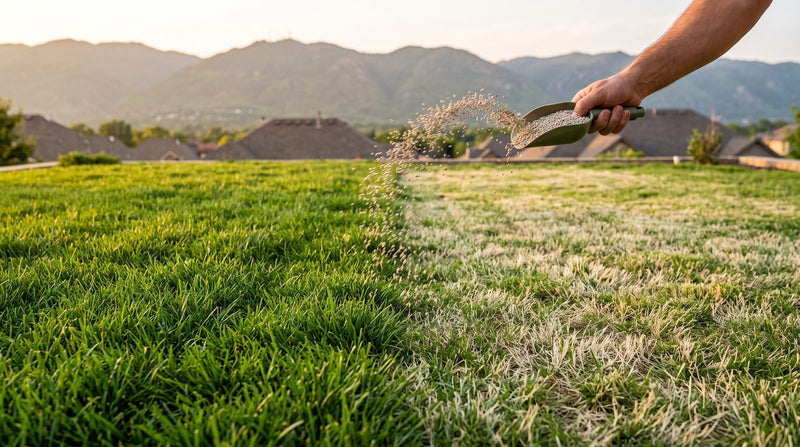
How to make your lawn green again in Pakistan
Pakistani lawns go patchy every summer and yellow every winter. Four things done at the right time keep Dhaka grass green most of the yea...
Read →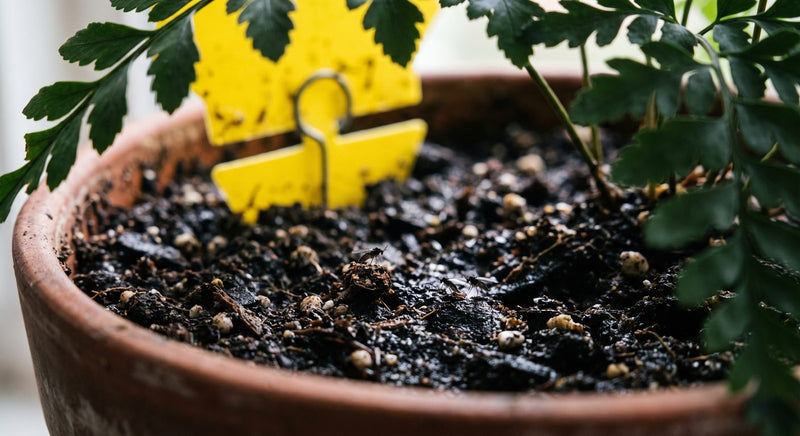
Fungus gnats: those tiny flies around your plant soil, and how to get rid of them
Tiny black flies around your plant pots are fungus gnats. They have one weakness: dry soil. How to clear them in ten days with drying, st...
Read →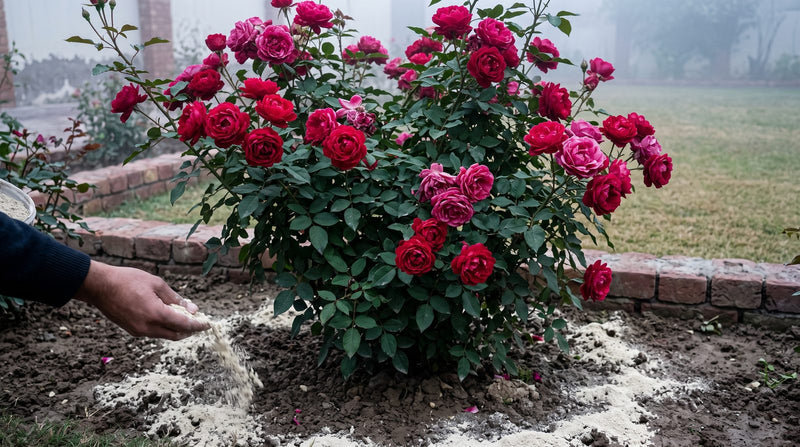
Best fertilizer for roses in Pakistan: a month-by-month guide
Roses in Pakistan flower in winter, not summer, so the feeding calendar is backwards from the books. Nitrogen in spring, nothing in the h...
Read →