Money plant care in Pakistan: how to keep it green and growing
The money plant survives almost anything, which is why it gets neglected. Where to put it, how often to water in a Pakistani summer, what soil to use, when to feed, and how to fix yellow leaves, mealybugs and brown tips.

The money plant is the most forgiving houseplant in Pakistan, and also the one we get the most complaints about. Both things are true. It will survive almost anything, which is exactly why people stop paying attention to it, and then wonder why the plant that used to cover half the wall has gone thin and yellow at the bottom.
Here is what it needs, what it doesn't, and what to do when it stops growing.
Light: bright, but not on the leaf
A money plant wants a lot of light without the sun actually touching it. The ideal spot is a metre or two back from an east-facing window, or anywhere in a room that stays bright all day without a direct beam falling on the pot.
Put it on a west-facing balcony in Lahore in June and the afternoon sun will bleach the leaves in a week. You'll see pale, papery patches that go brown at the edges. Move it back into the shade and the new leaves will come out fine, but the burned ones won't recover.
The opposite mistake is the dark corridor. A money plant will live there for years. It just stops growing, the leaves get smaller, and the golden variegation fades to plain green because the plant needs every bit of chlorophyll it can get. If yours has gone dull and leggy with long bare stems between leaves, it's asking for more light, not more food.
Watering: the thing most people get wrong
Overwatering kills more money plants than anything else. The roots rot in wet soil, the leaves go yellow and soft, and the owner responds by watering more because the plant looks sad.
Push a finger two inches into the soil. If it's damp, wait. Only water when that top layer has dried out. In a Karachi or Lahore summer that might be every four or five days for a pot on a balcony. In an air-conditioned room it could be once a week. In December and January, when the plant is barely growing, every ten to fourteen days is plenty.
When you do water, water properly. Pour until it runs out of the drainage hole, then empty the saucer. A money plant sitting in a tray of water is a money plant with rotting roots by the end of the month.
If you're not sure whether to water, don't. A money plant that's slightly dry droops a little and perks up within an hour of watering. A money plant that's been sitting wet for two weeks doesn't perk up at all.
The soil in the pot matters more than the pot
Most money plants in Pakistan are potted in plain garden soil from a nursery, which turns to brick in a container. Water sits on top, then runs down the gap between the soil and the pot wall without wetting the middle, and the roots get neither air nor water.
When you next repot, mix roughly one part coco peat and one part vermicompost into two parts of that garden soil. The coco peat keeps it loose, the vermicompost feeds it for the first couple of months, and water actually reaches the roots. The plant should go up one pot size at a time, and only when roots are coming out of the drainage hole.
Feeding: a little, regularly, in the growing season
A money plant grows from roughly February to October in most of Pakistan and slows right down in winter. Feed it during that window and leave it alone the rest of the year.
Once every four to six weeks, scratch a tablespoon of The Master Blend into the top inch of soil and water it in. That gives the plant a slow, steady supply of nitrogen for leaf growth, plus neem cake in the soil to keep fungus gnats from breeding in the pot. It's enough for a normal-sized money plant in a 10 to 12 inch pot. Don't double it because the plant looks hungry. More fertilizer in the soil doesn't make it eat faster.
If the plant has stalled completely and the new leaves are coming out small and pale, that's the one time a liquid feed makes sense. Rapid Green at 5ml per litre, watered in every ten days for a month, usually gets it moving again. Once you see full-sized leaves, go back to the monthly dry feed.
Money plant in water
Half the money plants in Pakistani homes live in a glass bottle on a shelf, and that's fine. They'll grow that way for years. Two rules: change the water every week so it doesn't go green and stagnant, and don't let the leaves sit below the waterline, only the stem and roots.
A plant in water will always grow slower than one in soil, and the leaves stay smaller, because water has nothing in it. If you want it to actually fill out, either move it to soil or add a few drops of Rapid Green to the bottle at each water change. Don't use a dry fertilizer in water. It clouds, it smells, and it rots the roots.
Cutting and propagating
This is the easiest houseplant to multiply. Cut a piece of stem with three or four leaves on it, making the cut just below a node (the small bump on the stem where a leaf joins and a little brown root nub sticks out). Drop the cut end in water. Roots appear in one to two weeks. Once they're a couple of inches long, pot it up or leave it in water.
Cutting the plant back also makes it bushier. A money plant left alone grows one or two long vines. Trim the ends and it branches from the nodes below the cut.
Cleaning the leaves
Dust settles on money plant leaves faster than on almost any other houseplant because the leaves are flat, waxy, and usually hang at an angle that catches everything. In a city like Lahore or Faisalabad, a month of dust can cut the light reaching the leaf by a noticeable amount. The plant slows down and you don't know why.
Wipe the leaves every two or three weeks. A damp cloth works. If you want them to shine and stay clean longer, mist with Lush Leaf and wipe with the microfiber cloth that comes with it. Don't use any kind of oil on the leaves, including the coconut oil trick that goes around on Facebook. It looks glossy for a day and then blocks the pores.
When things go wrong
Yellow leaves at the bottom
Almost always water. Check the soil before you do anything else. Our yellow leaves guide walks through this in detail.
Brown crispy tips
Dry air or salty tap water. Air conditioning pulls the humidity out of a room fast. Move the plant away from the AC vent, and every couple of months take the pot outside and run water through it for a minute to flush out the salts.
White cottony fluff where the leaves join the stem
Mealybugs. They love money plants. Wipe off what you can see with a cotton bud dipped in rubbing alcohol, then spray the whole plant with Shield & Feed at 10ml per litre, getting under the leaves and into the leaf joints. Repeat every four days for two weeks. They hide, so one spray is never enough.
Tiny flies around the soil
Fungus gnats, breeding in wet soil. Let the top two inches dry out fully between waterings, and the Master Blend's neem cake takes care of the larvae. No spray needed.
Fine webbing and speckled leaves
Spider mites, which show up in hot, dry rooms. Shield & Feed again, sprayed in the evening, every three to four days until the webbing is gone.
The short version
Bright room, no direct sun. Water when the top two inches are dry, not on a schedule. Loose soil with coco peat mixed in. A tablespoon of Master Blend once a month from February to October. Wipe the leaves. That's it. A money plant treated this way will outgrow its space, which is a better problem than the other kind.
If yours is doing something not covered here, send us a photo on WhatsApp at 0370-9145600 with a shot of the whole plant and a close-up of the problem.
More from The Journal.
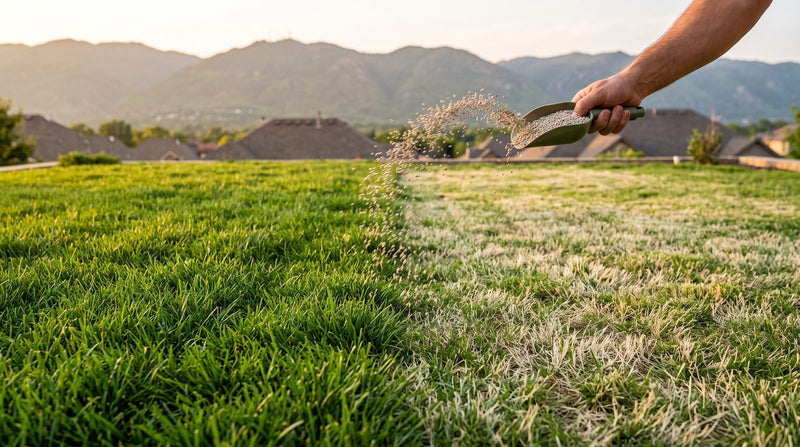
How to make your lawn green again in Pakistan
Pakistani lawns go patchy every summer and yellow every winter. Four things done at the right time keep Dhaka grass green most of the yea...
Read →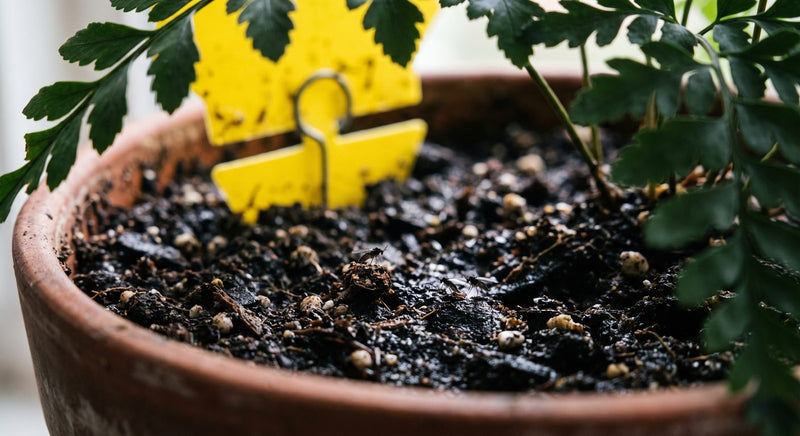
Fungus gnats: those tiny flies around your plant soil, and how to get rid of them
Tiny black flies around your plant pots are fungus gnats. They have one weakness: dry soil. How to clear them in ten days with drying, st...
Read →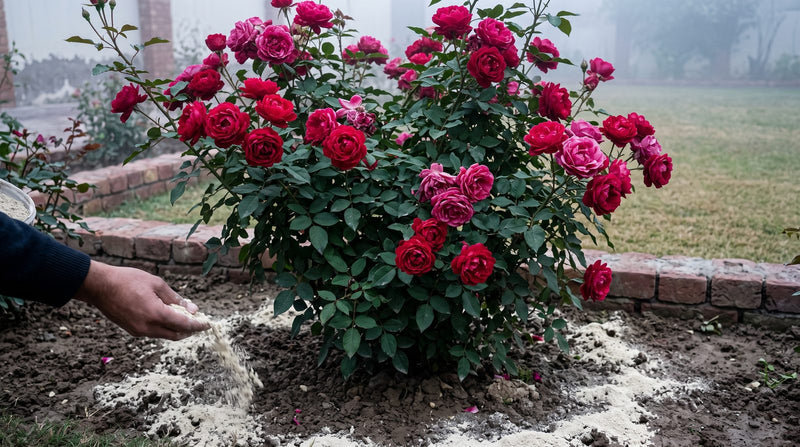
Best fertilizer for roses in Pakistan: a month-by-month guide
Roses in Pakistan flower in winter, not summer, so the feeding calendar is backwards from the books. Nitrogen in spring, nothing in the h...
Read →